If you suffer from dry itchy skin, today's tips are for you!
1. Use a gentle, moisturizing cleanser. If you use bar soap, make sure the soap is supplemented with oils or uses butters (such as Shea butter) which do not fully saponify and leave a trace of emollient on your skin.
2. Moisturize immediately after showering/washing. When you moisturize within 3 minutes of bathing, you seal in the moisture and prevent it from evaporating.
3. Use a cream or body butter rather than a lotion. Creams and body butters contain much more oils and butters than do lotions (creams are about 50% emollient-based whereas lotions only have about 20%). While lotions may be sufficient for summer oily skin, they just aren't enough to do anything for dry winter skin.
4. Take supplements. Most people think the status of their skin has nothing to do with what they intake. This can't be further from the truth. Even if you eat healthy and exersize, supplement it with a once daily multivitamin. A daily supplement of fish oil (lots of omega-3 fatty acids) can also be great for dry skin.
Showing posts with label face creme. Show all posts
Showing posts with label face creme. Show all posts
Monday, January 31, 2011

Monday, January 10, 2011
Petrolatum - Friend or Foe?
 Just before our Christmas vacation to the wonderful snowy land that is Michigan, I dug out my heavy winter coat (which had been in a box for two years, thank you Florida). Before sending it to be dry cleaned, I looked inside the pockets and to my surprise there were two items, a $20 bill (I love finding money that I have forgotten about) and a tube of Vaseline Lip Therapy lip balm. I recall buying the lib balm at a gas station out of desperation on our moving trip down to FL. Living in Michigan for me meant having to deal with dry chapped lips for almost all of winter. I used to buy Burt's Bees lip balm but that is not always an option, so I settled for this balm, which claimed to "protect dry, chapped lips" with it's "advanced formula".
I probably didn't even read the ingredient list. As a scientist, when I read "Advanced Formula" I have certain expectations. These expectations are almost never met outside the laboratory so I have learned to lower my expectations as a normal civilian. Still, I was shocked to read the ingredient list. "Active Ingredient: White petrolatum USP (100%)". So this "advanced" formula contains ONE chemical: Petrolatum! I thought to myself: WHAT THE WHAT? how is the company even allowed to make such claims? Petrolatum is KNOWN to cause further drying and damage to the skin! Even more importantly, how could I, an educated person who cares about my health, ever purchase this item???? I almost threw it away in shame but after telling the story to a couple of friends, I decided I should use it to help clear up some misinformation about this mystery substance petrolatum.

Here I will give you only the facts, in bullet points, because frankly you don't have all day!
What is it?
- Petrolatum is also known as white petrolatum, petroleum Jelly or soft paraffin.
- As the name suggests, it is a petrochemical (derived from oil).
- It was discovered in a US oil rig and refined by Robert Chesebrough, a chemist who later founded the Vaseline company.
- Its molecular structure is a non-polar hydrocarbon, which renders it very hydrophobic (water repelling).
- Because of its hydrophobic nature, petrolatum does not get absorbed but forms a layer of film (a barrier) on the skin and does not allow most things to pass through.
- This barrier is exactly why the FDA has approved petrolatum as a "skin protectant." Placing petrolatum on a cut can prevent bacteria and dirt from penetrating the wound and decreased the chance of infection (much like a band aid).
- This barrier can also keep skin hydrated by preventing evaporation of the skin's natural moisture.
- Petrolatum is also very stable (although it is flammable) and easy to integrate into skin care formulas.
- It is CHEAP and profitable! The 10g tube of lip balm (100% petrolatum) sells for $2 while I can buy it in bulk for $6/kg, which means only 6 cents for the 10g tube.
- The barrier formed on the skin by petrolatum can be a double edged sword. If it can prevent evaporation of moisture from the skin, it also prevents absorption of moisture. If it can keep bacteria out, it can also trap bacteria in, etc.
- The barrier blocks your pores and prevents proper detoxification.
- The barrier prevents absorption of essential nutrients, vitamins and anti-oxidants by the skin, leading to under-nourished and unhealthy skin. This is why long-term use of petrochemicals can actually cause breakouts and leads to dry, cracked and damaged skin.
- It is simply a barrier, it does nothing to nourish or promote the health of your skin.
- Petrolatum has been proposed by various studies to be a carcinogen (cancer causing agent). As a scientist, I can tell you that just about EVERYTHING has been shown by a couple of studies to be a carcinogen! I am not defending petrolatum, but there is just not enough evidence to label it as a known carcinogen (though it wouldn't be the least bit surprising that rubbing petroleum-based compounds all over one's body would be hazardous!)
- There is no general consensus on just HOW bad petrolatum is for you. For example, it has been banned for use in cosmetics in the European Union but the environmental working group gives petrolatum a non-toxic score of 2 (scale of 0-10, 10 being most toxic).
- A more concerning fact to me is that petrolatum is often contaminated with polycyclic aromatic hydrocarbons (PAHs) which are KNOWN carcinogens (not much debate on this one, pretty much everyone agrees!). Sadly, the FDA has no rules regarding the purity of petrolatum so you never know if you are putting PAHs on your body or not!
- One of every 14 skin care products on the market contains petrolatum. So you probably DO use it, unless you carefully filter.
- Surprisingly, 40 percent of all baby lotions and oils use petrolatum so if you have kids, pay attention!
- Luckily, FDA restricts petrolatum in food to no more than 10 parts per million (0.001%) so at least you don't have to worry about it in food items (although you DO ingest lip balm).
- Don't use it! Petrolatum is NOT your friend! Do you know how many healthy alternatives there are to petrochemicals? Just about any natural oil or wax will have the benefits of petrolatum (and much much more) without the harm. I just can not think of any good reason people choose petroleum-based skin care. Probably the same reason I bought the Vaseline lip balm: no time to think about it and it claims to protect with its advanced formula. Well, now you know. So next time you're at the store and grab a lotion or lip balm and see "petrolatum" in the ingredient list, just put it back down and reach for something else.
--Dr. B of hydrOtion
Saturday, July 10, 2010
Good Skin Nutrition: Vitamins from Inside and Out!
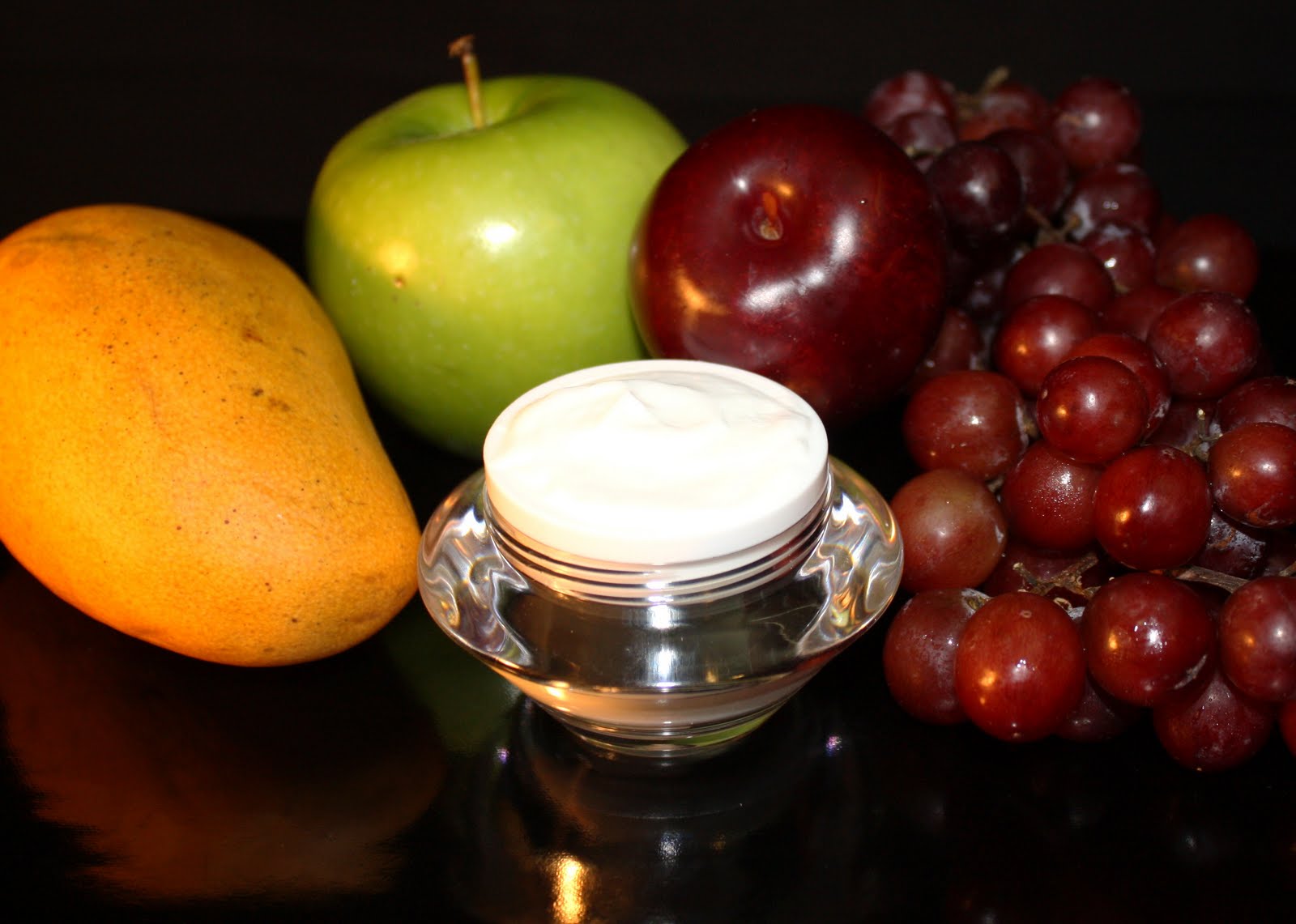
Many lotions and crèmes advertise that they contain vitamins, but what does this mean for my skin?
Vitamins C & E:
Damage due to sunlight exposure is one of the main sources of accelerated skin aging. Photoaging is associated with skin pigmentation (dark spots), dehydration, wrinkles, droopy skin, broken blood vessels, leathery skin and can contribute to skin cancers. Recent research highlights a remarkably protective role for vitamins against photoaging, particularly for vitamins C and E.
Topical application of vitamins C & E can provide “appreciable photo-protection” according to Duke University researcher Dr. Sheldon Pinnel and colleagues presenting their research at the annual meeting of American Academy of Dermatology. This is perhaps not surprising, since the antioxidant properties of vitamins C and E have been known for some time. Antioxidants fight free radicals that result from sunlight, smoke or pollution and can eat away at the collagen and damage cells. Indeed, a study in the Journal of Investigative Dermatology saw less DNA damage in skin cells of people who take vitamins C and E, which correlates with decreased sunburns from exposure to UVB radiation.
These anti-oxidants are not just good for your skin, they are good for your entire body. The best solution for your body is to ensure you have enough of these vitamins in your diet. The recommended daily intake value for vitamin C is between 1500-2500 mg (though vitamin C does not become toxic until much higher doses; what is not absorbed by the body is excreted). The recommended daily value for vitamin E is 400-600 IU. For Healthier skin, chose lotions and Day crèmes that contains these vitamins and be sure to apply to your skin before and after exposure to sunlight.
Vitamin B Complexes:
There are several types of B vitamin complexes and when it comes to your skin you should pay attention to at least two: biotin and niacin. Biotin is essential for skin and hair health and the slightest deficiency will manifest itself in imperfections in skin and hair. Niacin has anti-inflammatory and protective properties and crèmes containing biotin or niacin can give skin a healthy and youthful look even in a short amount of time (5-6 days).
Vitamins A & K:
Vitamin A is essential for repair and maintenance of healthy skin. Having sufficient levels of vitamin A can lead to reduction in wrinkles, fine lines and acne. If you take a multivitamin, you are probably equipped with enough vitamin A to keep your skin healthy but if you find yourself with premature wrinkles or acne, it may be worthwhile to increase your intake of vitamin A. The recommended intake value for vitamin A ranges from 5,000 – 20,000 IU.
On the other hand, when it comes to your skin vitamin K is better topically applied than taken in your diet. It’s particularly good for dark circles and bruises and a combination of vitamins A and K in your eye crème can be even more effective than either one alone.
The trickiest part with skin care products is to make sure they are fresh, since vitamins and minerals can degrade over time (most are stable in powder form, but degrade much faster once in a soluble solution such as a lotion). Look for a manufacture date and buy items that are less than 3 months old (keep in mind, you want it to last for another three months while you use it) and don’t bother with items that are over a year old. If it doesn’t have a manufacture date, that’s not a good sign! All hydrOtion products are made with a manufacture date on each jar to help you ensure your products contain high levels of active ingredients and vitamins.
Feel free to send us questions regarding vitamins and skin care or skin care in general at hydrOtion@gmail.com.
Subscribe to:
Posts (Atom)

 Posts
Posts